



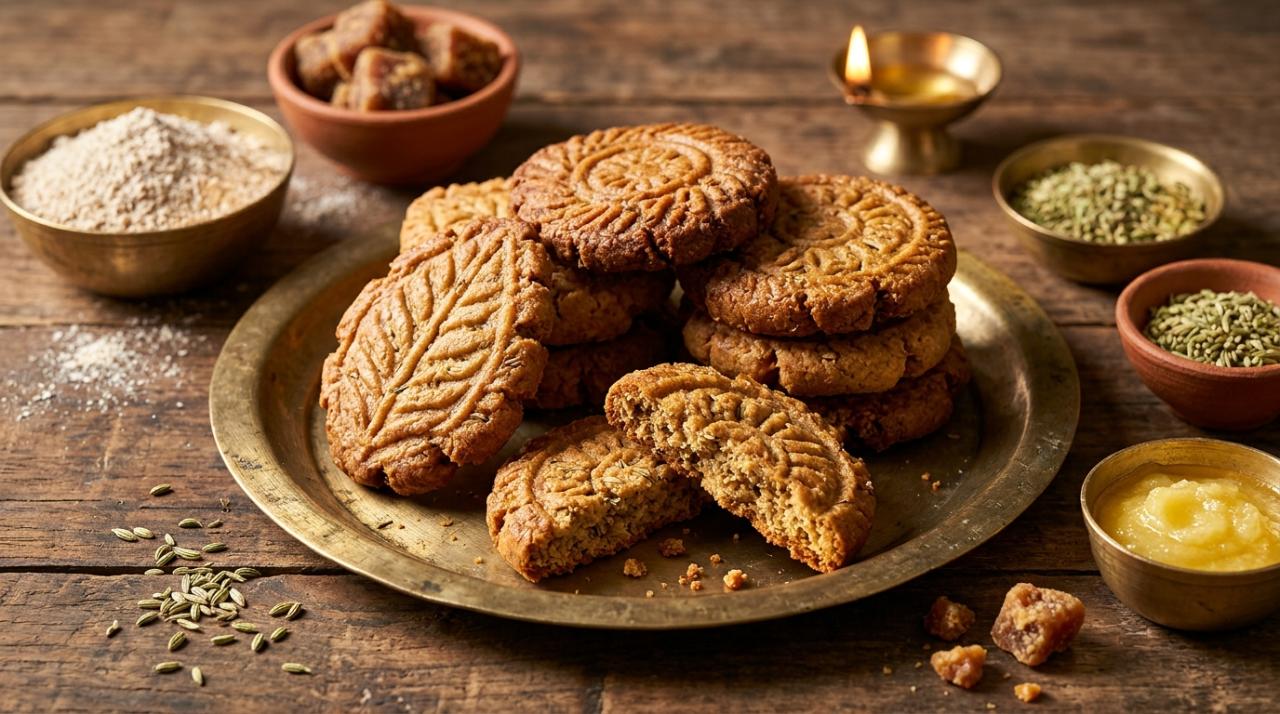
Diwali is a celebration of light, happiness, and treasured food traditions. While many festive tables feature rich milk sweets and colourful confections, some of India's most memorable desserts are made from simple ingredients found in everyday kitchens. Thekua is one such traditional sweet, known for its crisp texture, deep jaggery flavour, and beautifully patterned surface.
Popular in Bihar, Jharkhand, and parts of eastern Uttar Pradesh, Thekua is especially associated with the Chhath Puja festival. It is also an interesting addition to a Diwali sweet collection for anyone who enjoys discovering regional Indian recipes.
Made with wheat flour, jaggery, ghee, and aromatic spices, Thekua offers a delicious alternative to syrup-soaked desserts. Its distinctive texture comes from carefully prepared dough and slow frying. This traditional Thekua recipe will help you create these golden-brown treats at home while exploring a meaningful part of India's culinary heritage.
What Makes Traditional Thekua Special?
Thekua stands out because it does not rely on a sugary coating or a complicated filling. Instead, its flavour develops from the combination of jaggery, wheat flour, and ghee. Some recipes include grated coconut, fennel seeds, or cardamom to add further aroma and texture.
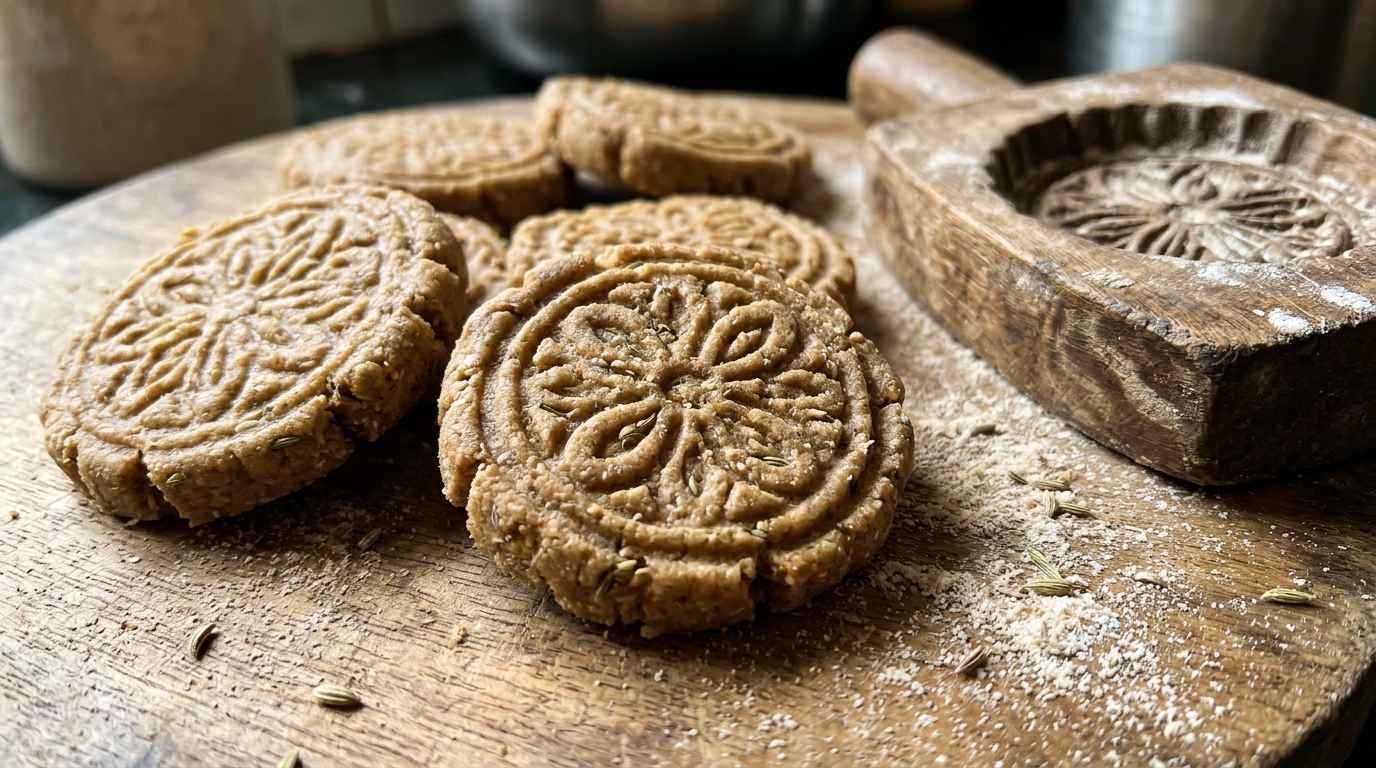
Traditionally, the dough is shaped using wooden moulds or pressed by hand to create decorative patterns. These designs give the sweet its rustic appearance and make each piece visually distinctive.
Thekua is also valued for its firm texture and convenience for festive offerings and sharing. Its preparation demonstrates how simple pantry ingredients can be transformed into a sweet associated with family traditions and cultural celebrations.
Ingredients for Homemade Thekua
This recipe makes approximately 12–15 medium-sized pieces.
- 2 cups whole-wheat flour
- ¾ cup grated or powdered jaggery
- 3–4 tablespoons ghee
- Approximately ¼ cup water, as needed
- 2 tablespoons grated coconut, optional
- ½ teaspoon fennel seeds
- ¼ teaspoon cardamom powder, optional
- A small pinch of salt
- Oil or ghee for deep-frying
The amount of water may vary depending on the moisture in the jaggery and flour. Add it gradually to avoid making the dough too soft.
How to Make Traditional Thekua Step by Step
Step 1: Prepare the Jaggery Liquid
Place the jaggery in a saucepan with a small amount of water. Warm it over low heat until it dissolves, stirring gently.
Strain the liquid to remove impurities, then allow it to cool until lukewarm. Avoid adding very hot jaggery liquid directly to the flour, as it can affect the dough's texture.
Step 2: Combine the Dry Ingredients
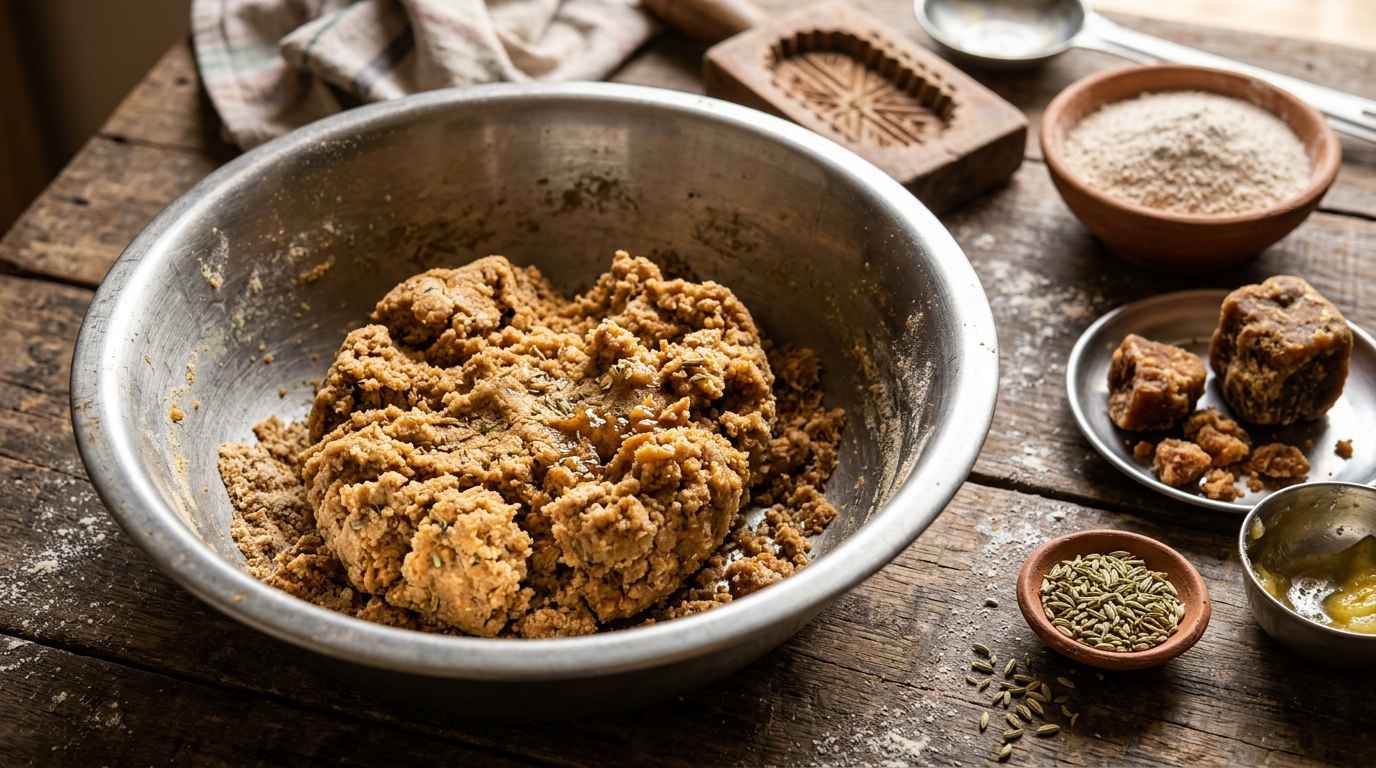
Place the wheat flour in a large mixing bowl. Add the salt, fennel seeds, cardamom powder, and optional grated coconut.
Mix the ingredients evenly. Fennel provides a distinctive aromatic flavour, while coconut adds a gentle sweetness and additional texture.
Step 3: Prepare the Dough
Add the ghee to the flour and rub it in with your fingertips until the mixture resembles breadcrumbs.
Gradually pour in the jaggery liquid, mixing as you go. Add a little extra water only if needed. Knead gently until a firm, cohesive dough forms.
The dough should be firmer than ordinary chapati dough. Avoid over-kneading or adding too much liquid, as this may affect the finished texture.
Step 4: Shape the Thekua
Divide the dough into small, equal-sized portions and roll them into balls.
Flatten each ball into a thick disc. Press it into a traditional wooden mould if available, or use a fork to create decorative lines on the surface.
Keep the pieces approximately the same thickness so they cook evenly. Place the shaped Thekua on a clean tray while preparing the remaining dough.
Step 5: Fry Until Crisp and Golden
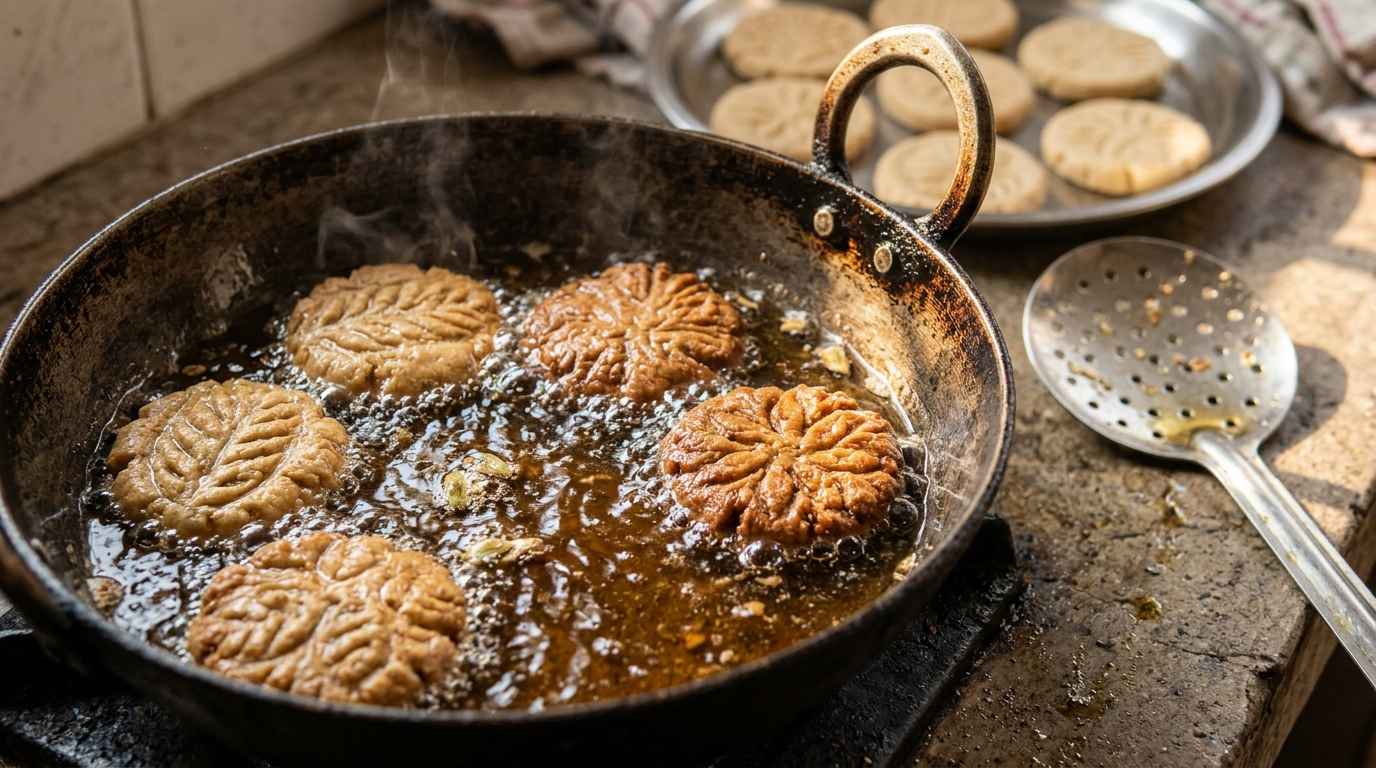
Heat oil in a deep, heavy-bottomed pan over medium-low heat. Test the temperature using a small piece of dough; it should bubble gently rather than darken immediately.
Carefully add a few pieces at a time. Fry slowly, turning them occasionally, until they develop a deep golden-brown colour and a firm exterior.
Remove the Thekua with a slotted spoon and place them on a rack or absorbent paper. Allow them to cool completely before tasting, as their texture becomes firmer as they cool.
Expert Tips for Perfect Thekua
The secret to a successful traditional Thekua recipe is maintaining the right balance between dough firmness and frying temperature. A soft, sticky dough can make shaping difficult, while excessively dry dough may crack.
Add the jaggery liquid gradually and use only enough moisture to bring the ingredients together. Fry the pieces slowly to help them cook through without burning on the outside.
For a more traditional flavour, use good-quality jaggery and freshly crushed fennel seeds. If using a mould, lightly grease it to help release the dough cleanly.
Avoid stacking the sweets while they are still warm. Trapped steam can soften the crust and reduce their characteristic crispness.
How to Serve and Store Thekua
Serve Thekua with tea, coffee, or a selection of other traditional Indian sweets. Its earthy sweetness pairs particularly well with unsweetened drinks, making it a welcome addition to a festive platter.
You can also wrap the cooled sweets individually or arrange them in decorative food-safe boxes for sharing with friends and family.
Once completely cooled, store Thekua in a clean, airtight container in a cool, dry place. Its keeping quality depends on the amount of moisture in the dough and the surrounding environment. Always use clean, dry utensils and discard any pieces showing signs of spoilage.
Rediscover the Beauty of Simple Indian Sweets
Thekua proves that a memorable dessert does not need elaborate ingredients or complicated decoration. Wheat flour, jaggery, ghee, and a few fragrant spices create a rustic sweet with a satisfying crunch and a distinctive traditional flavour.
By trying this traditional Thekua recipe, you can explore the food heritage of eastern India and introduce a lesser-known regional sweet
Most Popular











Anaya
comment1