



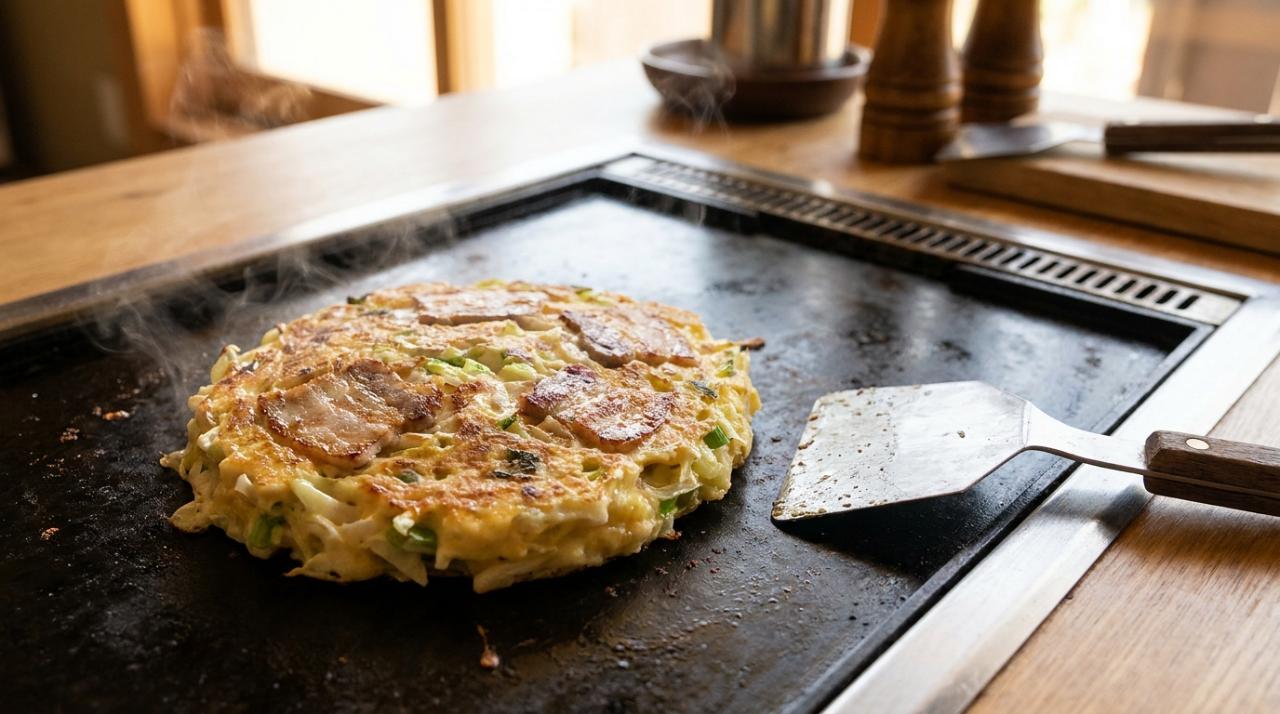
Japanese cuisine offers a wonderful variety of comforting dishes, from delicate noodle soups to sizzling street food. One of the most distinctive examples is okonomiyaki, a savory Japanese pancake prepared with cabbage, batter, and a selection of additional ingredients. Cooked on a hot griddle or frying pan, it develops a golden exterior while remaining tender and flavorful inside.
A traditional Japanese okonomiyaki recipe is especially associated with Osaka and Hiroshima, two regions famous for their different approaches to this beloved dish. The name combines okonomi, meaning “as you like,” and yaki, meaning “grilled” or “cooked.” This reflects the flexibility of the recipe, which can include pork, seafood, or other ingredients according to preference.
Although modern restaurants offer many variations, the traditional recipe relies on simple ingredients, careful cooking, and a balance of savory toppings. With fresh cabbage and a few Japanese pantry staples, you can prepare this popular comfort food at home.
What Makes Traditional Japanese Okonomiyaki Special?
Okonomiyaki is widely enjoyed in Japan as a casual meal, particularly in restaurants where diners may watch the pancakes being prepared on a hot iron griddle called a teppan. It is also popular at festivals and casual dining establishments.
There are two well-known regional styles. Osaka-style okonomiyaki mixes chopped cabbage, batter, and other ingredients together before cooking. Hiroshima-style okonomiyaki typically layers its ingredients and often includes noodles. Both styles are important parts of Japanese food culture.
The Osaka-style version is a convenient starting point for home cooks. Its combination of finely chopped cabbage, flour-based batter, egg, and optional pork creates a satisfying pancake. A topping of okonomiyaki sauce, Japanese mayonnaise, aonori seaweed powder, and bonito flakes adds further layers of flavor.
Ingredients for Traditional Japanese Okonomiyaki
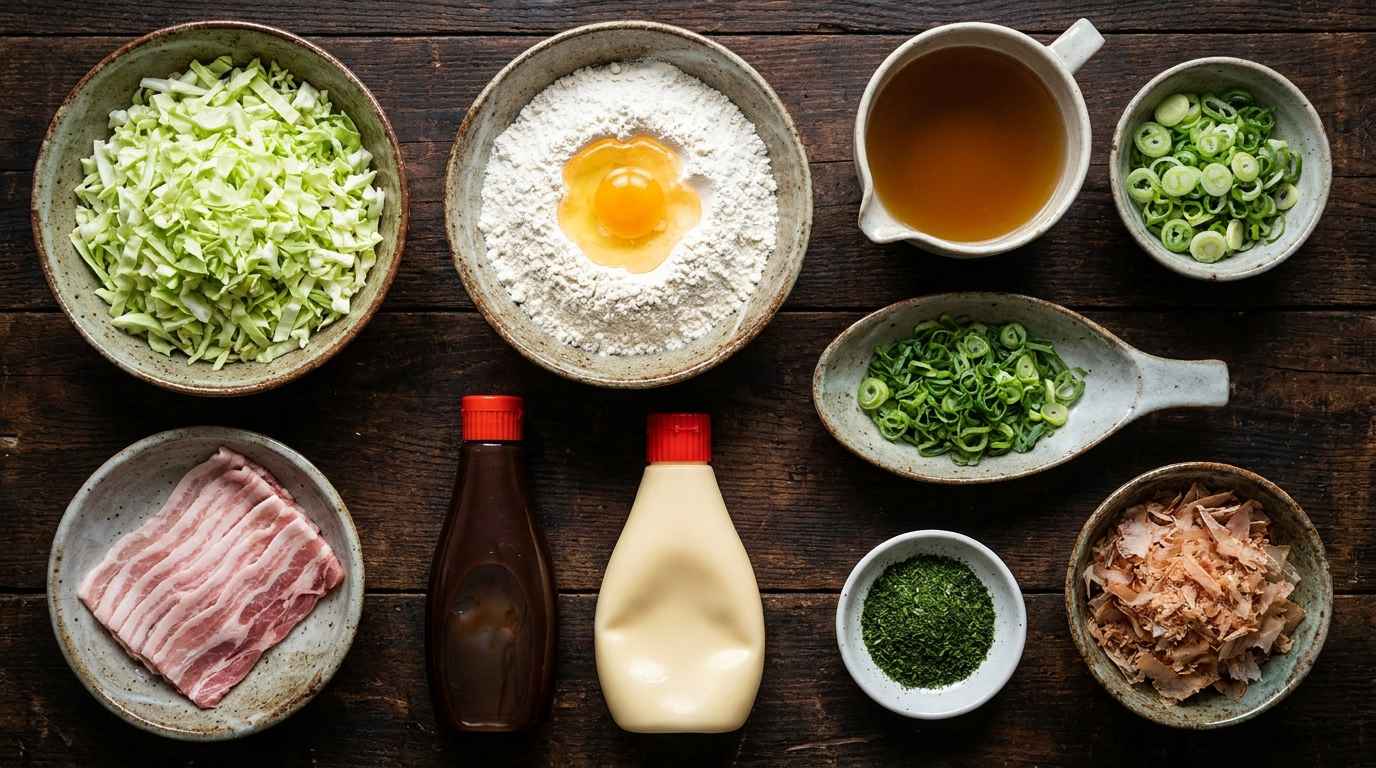
For two servings:
- 250 g green cabbage, finely chopped
- 100 g all-purpose flour
- 1 large egg
- 80–100 ml dashi stock
- 2 spring onions, finely sliced
- 100–150 g thinly sliced pork belly, optional
- 1 tablespoon neutral cooking oil
For traditional toppings:
- Okonomiyaki sauce
- Japanese mayonnaise
- Aonori (dried green seaweed powder)
- Katsuobushi (dried bonito flakes), optional
For a more traditional flavor, use Japanese dashi and commercially prepared okonomiyaki sauce. If the sauce is unavailable, a suitable savory-sweet alternative can be used, although the flavor will differ from the original.
Step-by-Step Guide to Making Okonomiyaki
Step 1: Prepare the Cabbage
Wash the cabbage and remove any damaged outer leaves. Slice it into thin strips, then chop it into small pieces.
Cabbage is one of the most important ingredients in Osaka-style okonomiyaki. Cutting it evenly helps it cook throughout the pancake while preserving some texture. Slice the spring onions thinly and set them aside.
Step 2: Make the Batter
Place the flour in a large bowl. Add the egg and dashi stock, then mix until a smooth, thick batter forms.
Avoid overmixing, as excessive mixing can develop the gluten in the flour and make the pancake dense. The batter should hold the cabbage together without completely covering it in a heavy coating.
Step 3: Combine the Ingredients
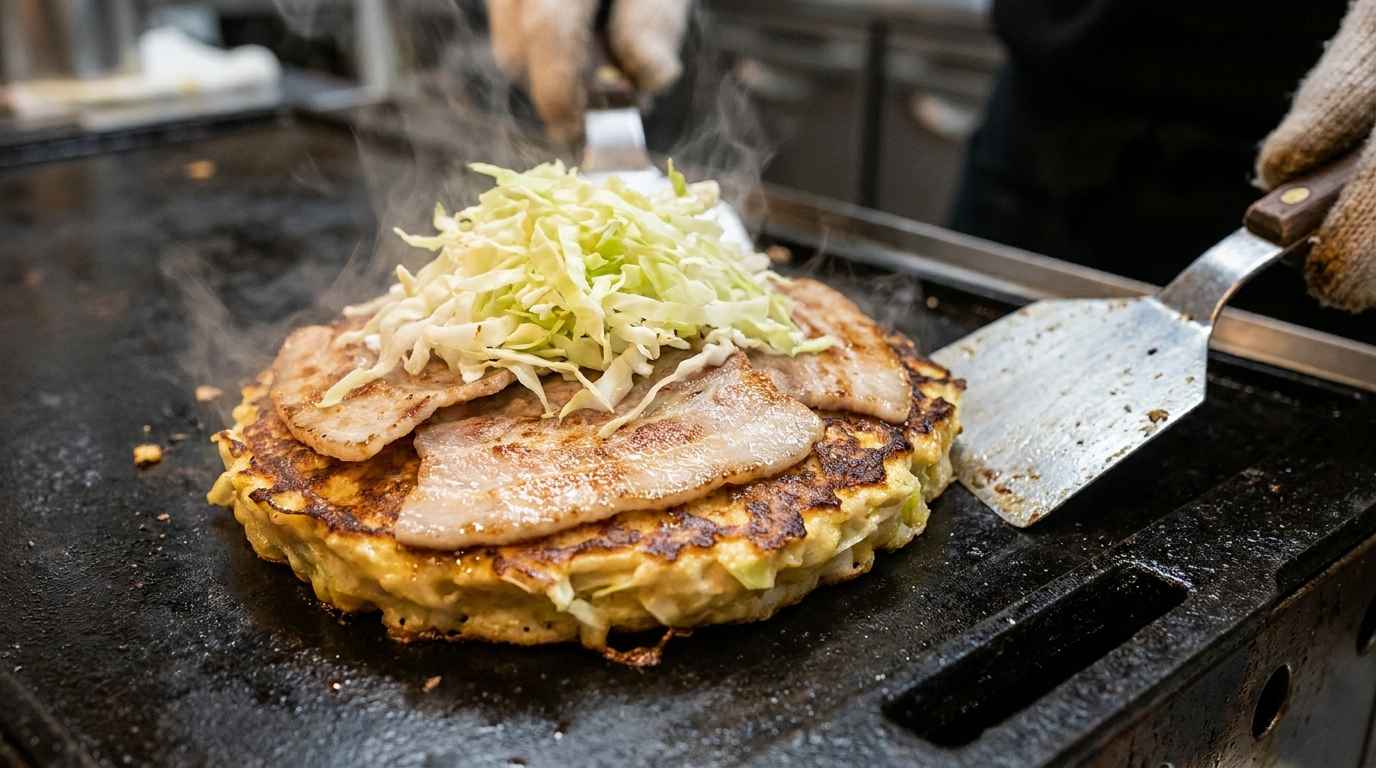
Add the chopped cabbage and spring onions to the batter. Fold everything together until the vegetables are evenly distributed.
Divide the mixture into two portions. Each portion should be thick enough to form a substantial pancake but still loose enough to spread slightly in the pan.
Step 4: Cook the Pancake
Heat a little cooking oil in a non-stick frying pan over medium heat. Add one portion of the mixture and shape it into a round pancake approximately 2 cm thick.
If using pork belly, arrange the slices over the top. Cook for around 4–6 minutes, until the underside becomes golden and holds together. Carefully flip the pancake using a wide spatula.
Continue cooking for another 4–6 minutes, adjusting the heat as needed. Make sure the cabbage softens and the center cooks thoroughly. The pork should also be fully cooked before serving.
Repeat with the remaining mixture. Avoid pressing the pancakes too firmly with the spatula, as this can make them compact rather than light and tender.
Step 5: Add the Traditional Toppings
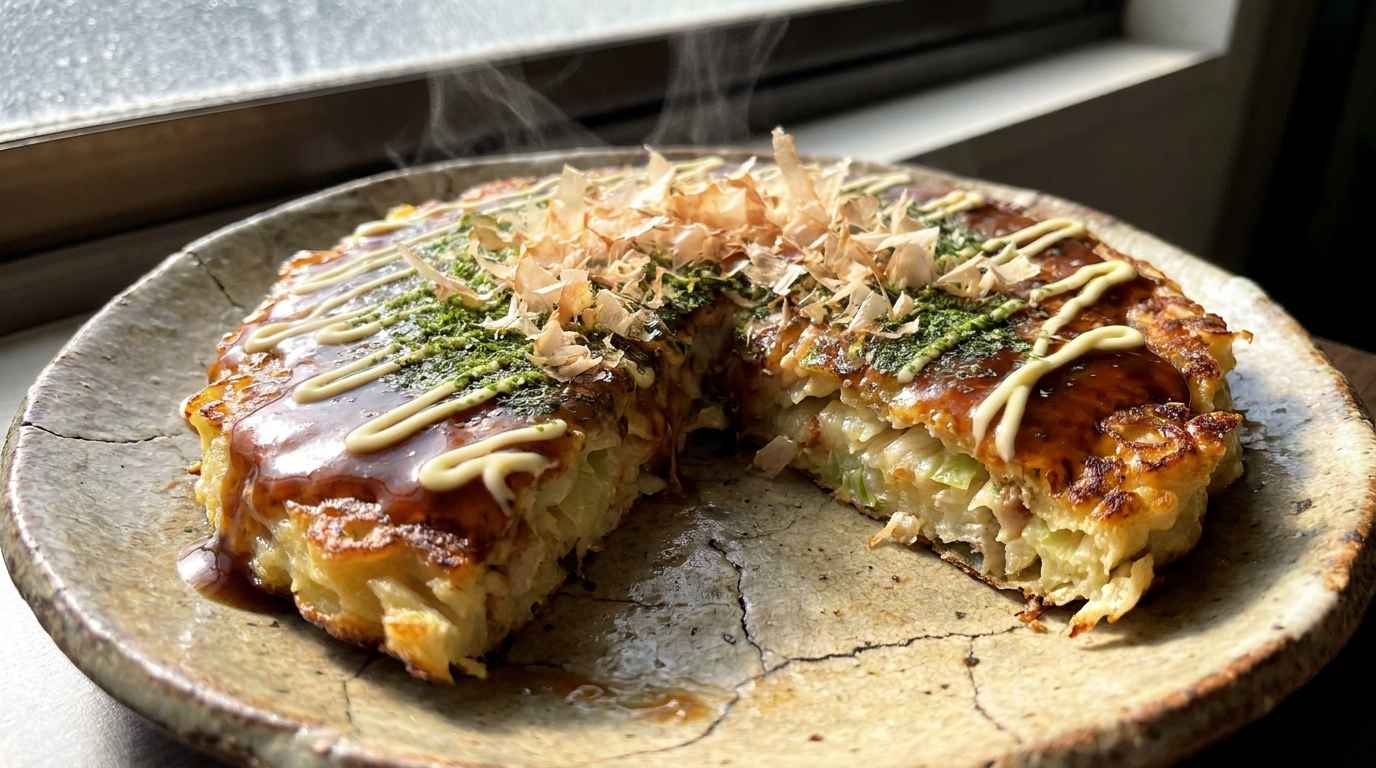
Transfer the cooked pancake to a serving plate. Spread okonomiyaki sauce over the surface and drizzle Japanese mayonnaise in thin lines.
Finish with a light sprinkle of aonori. Add katsuobushi if desired; the thin bonito flakes may move gently in the heat rising from the pancake.
Serve immediately while the outside remains lightly crisp and the inside is warm and tender.
Traditional Tips for Perfect Okonomiyaki
Use fresh cabbage and chop it finely to achieve an even texture. Keep the batter relatively light, and cook over moderate heat so the outside does not burn before the center is ready.
For a classic Osaka-style result, mix the cabbage directly into the batter. If you want to explore Hiroshima-style okonomiyaki, prepare the ingredients in layers and incorporate noodles as part of the regional method.
Pork belly is a popular addition, but shrimp, squid, or a vegetarian combination can also work. Remember that different ingredients require appropriate preparation and cooking times.
Conclusion
Traditional Japanese okonomiyaki is a delicious example of how simple ingredients can become a memorable meal through thoughtful preparation. Fresh cabbage, light batter, savory toppings, and careful griddle cooking create a pancake that is both comforting and full of flavor.
Whether you choose the classic Osaka-style mixture or explore the layered Hiroshima-style version, making okonomiyaki at home offers an enjoyable introduction to Japanese regional cuisine. Serve it fresh from the pan and experience one of Japan's best-loved savory dishes.
Most Popular











Anaya
comment1