



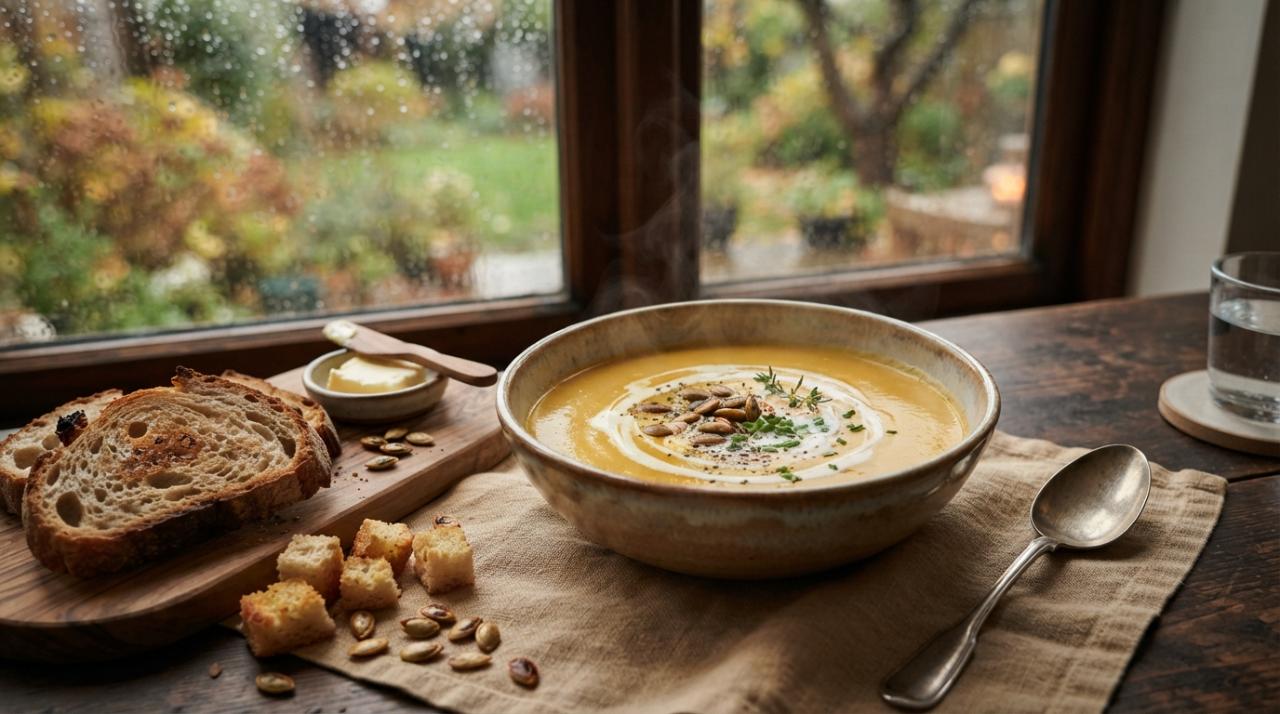
When the weather turns cool, rainy, or simply calls for something comforting, few dishes feel as satisfying as a warm bowl of homemade pumpkin soup. Naturally creamy, mildly sweet, and wonderfully savory, pumpkin soup is a simple dish that can transform humble ingredients into a comforting meal.
This authentic pumpkin soup recipe focuses on the natural flavor of pumpkin, complemented by onion, garlic, herbs, and gentle spices. Unlike heavily seasoned versions, this recipe allows the pumpkin to remain the star of the bowl.
Whether you are looking for an easy weeknight dinner, a cozy rainy-day meal, or a delicious starter for a special gathering, homemade pumpkin soup is an excellent choice.
What Makes a Good Pumpkin Soup?
The secret to delicious pumpkin soup is balance.
Pumpkin naturally has a slightly sweet and earthy flavor. To create a satisfying soup, it needs savory ingredients that enhance rather than overpower its natural taste.
Fresh onion provides sweetness and depth, while garlic adds warmth. Vegetable or chicken stock gives the soup body, and a small amount of cream can create a smooth, luxurious finish.
A touch of black pepper, nutmeg, or ground cumin can add another layer of flavor without taking attention away from the pumpkin.
The result should be smooth, creamy, flavorful, and comforting.
Ingredients for Authentic Pumpkin Soup
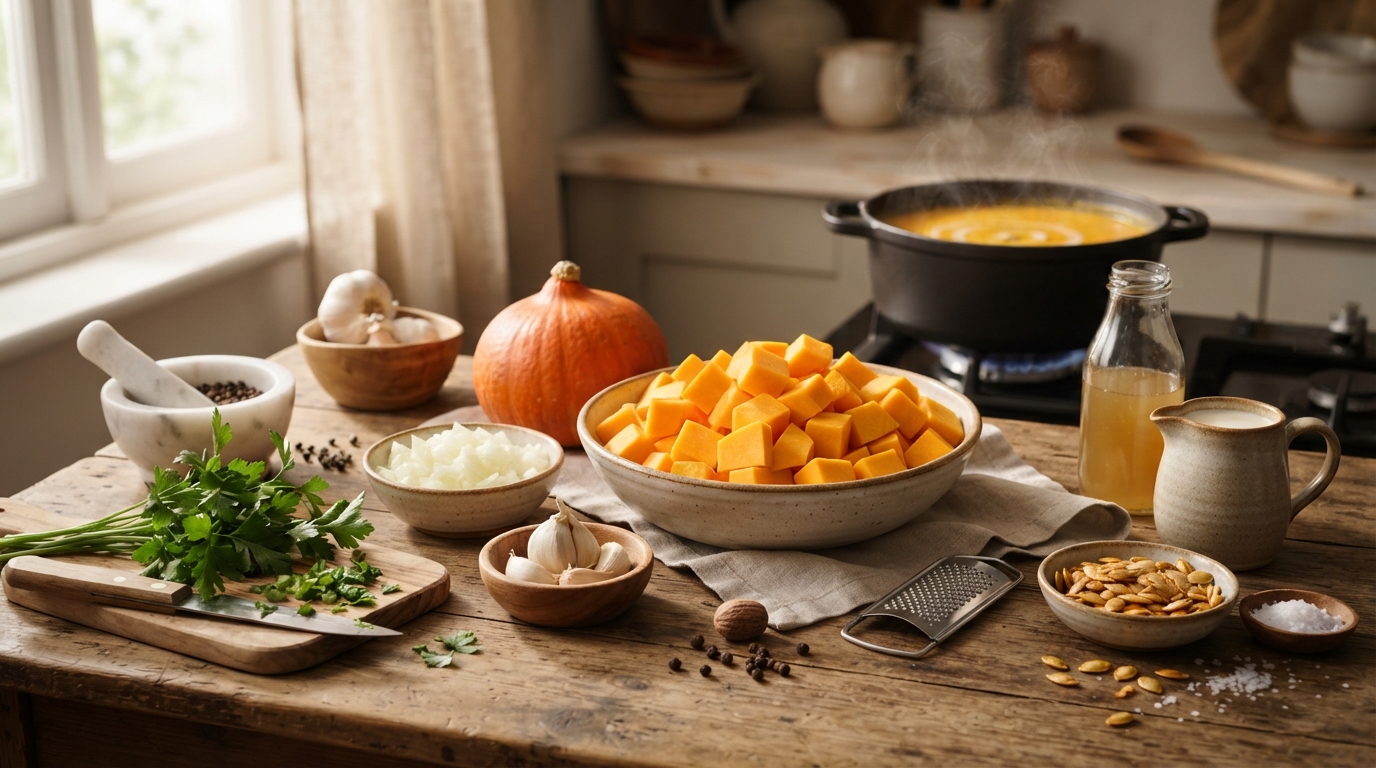
For approximately 4 servings, you will need:
- 1 kg fresh pumpkin, peeled and cut into cubes
- 1 medium onion, chopped
- 3 cloves garlic, finely chopped
- 1 tablespoon butter or olive oil
- 750 ml vegetable or chicken stock
- 100 ml cooking cream or fresh cream
- ½ teaspoon black pepper
- ¼ teaspoon ground nutmeg
- ½ teaspoon salt, or according to taste
- A small pinch of ground cumin, optional
- Fresh parsley or coriander for garnish
For serving, you can also prepare toasted bread, croutons, roasted pumpkin seeds, or a drizzle of cream.
Step 1: Prepare the Pumpkin
Begin by choosing a fresh, ripe pumpkin with firm flesh and a naturally sweet flavor.
Peel the pumpkin carefully and remove the seeds. Cut the flesh into relatively even cubes so that everything cooks at the same rate.
Do not throw away the pumpkin seeds. They can be cleaned, seasoned, roasted, and used as a crunchy topping for the finished soup.
Fresh pumpkin generally provides a deeper and more natural flavor than heavily processed alternatives.
Step 2: Build the Flavor Base
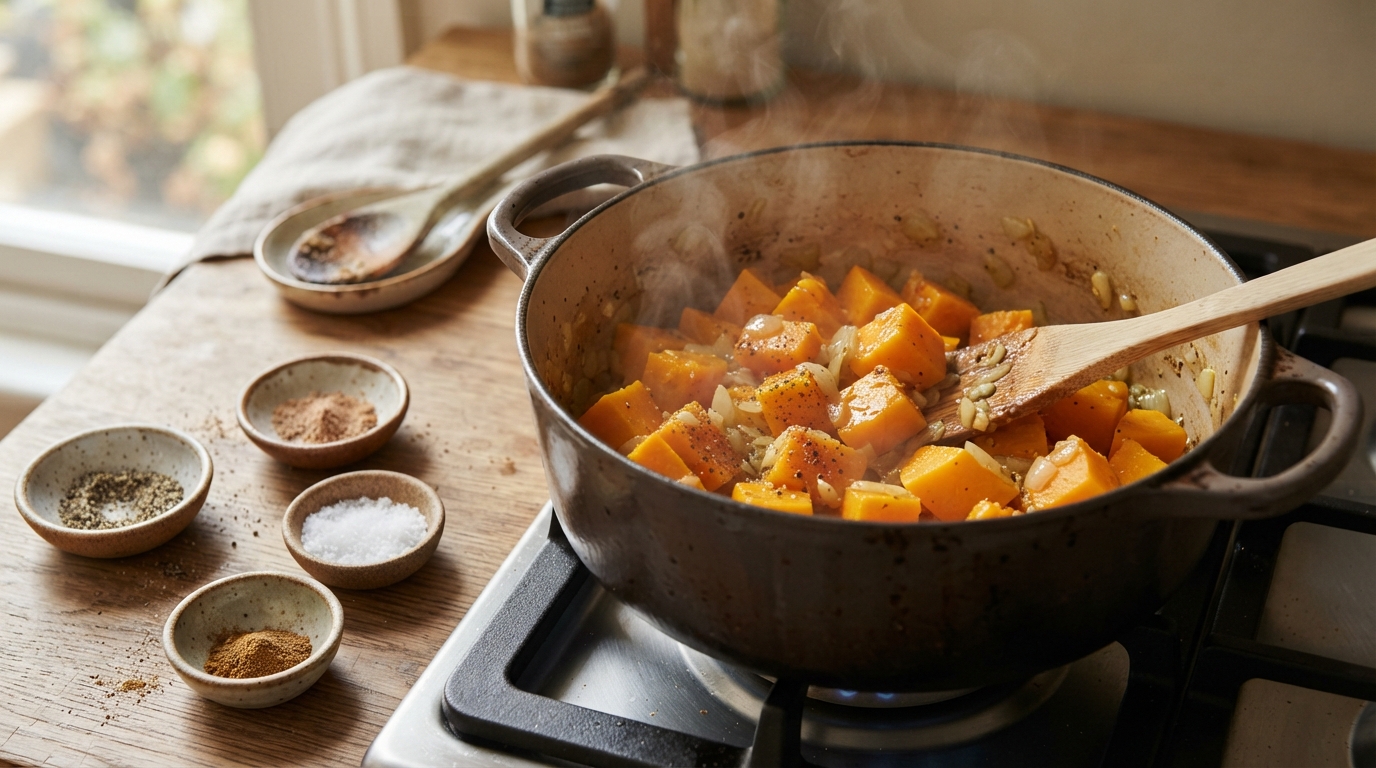
Heat butter or olive oil in a large saucepan over medium heat.
Add the chopped onion and cook gently until it becomes soft and translucent. Avoid browning the onion too much because the goal is to create a delicate flavor base.
Add the chopped garlic and cook for another minute until fragrant.
This simple combination of onion and garlic forms the foundation of the soup and helps bring out the natural sweetness of the pumpkin.
Step 3: Add the Pumpkin
Add the pumpkin cubes to the saucepan and stir everything together.
Season lightly with salt, black pepper, and a small amount of nutmeg. If you enjoy a slightly warmer flavor, add a pinch of cumin.
Cook the pumpkin with the onion and garlic for several minutes. This allows the vegetables to absorb the aromatic flavors before the stock is added.
Step 4: Add the Stock
Pour the vegetable or chicken stock into the saucepan.
The stock should cover most of the pumpkin pieces. Bring the mixture to a gentle boil, then reduce the heat and allow it to simmer.
Cook for approximately 20–25 minutes, or until the pumpkin becomes completely tender.
You should be able to easily pierce the pumpkin with a fork.
Avoid aggressively boiling the soup because gentle cooking helps preserve the delicate flavor of the pumpkin.
Step 5: Blend Until Smooth
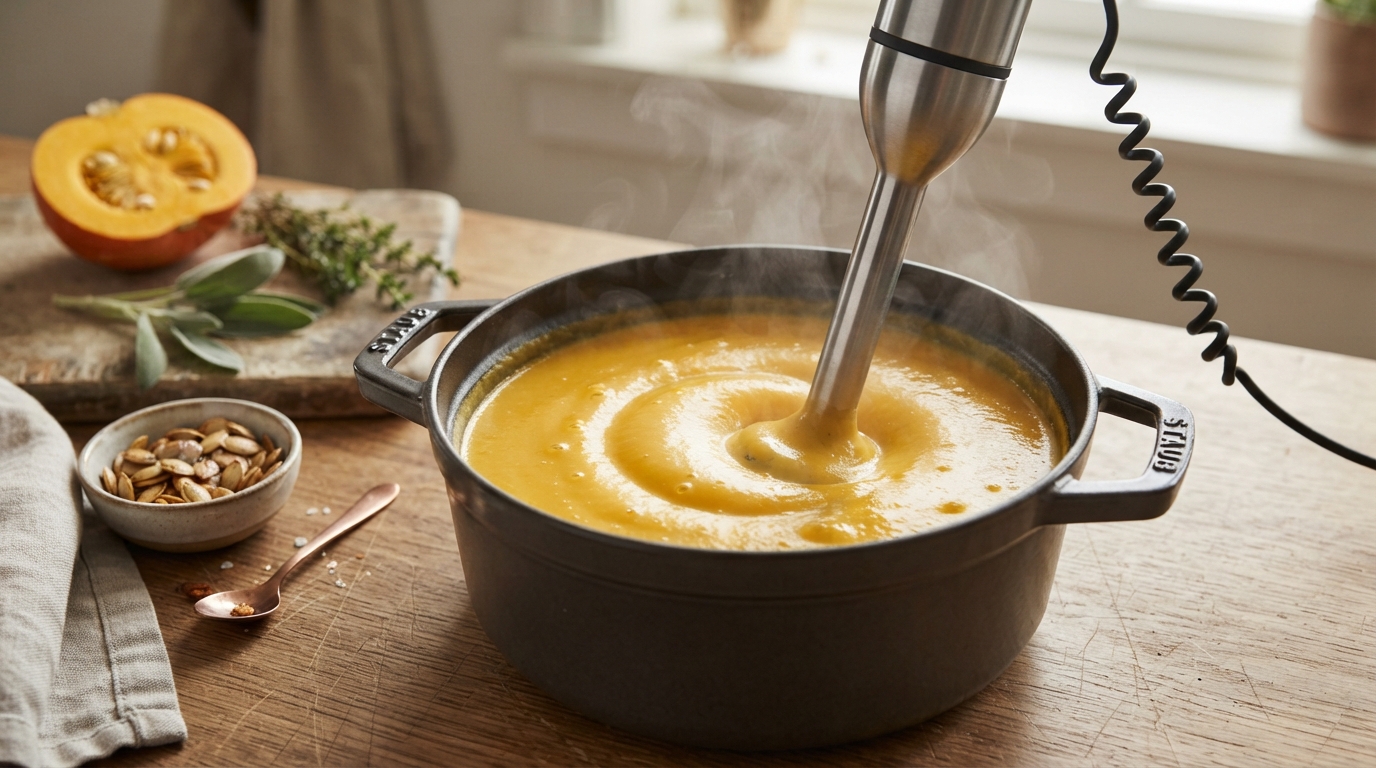
Once the pumpkin is soft, remove the saucepan from the heat.
Use an immersion blender to blend the soup until it becomes smooth and creamy.
If you do not have an immersion blender, carefully transfer the soup to a regular blender in small batches.
Be extremely careful when blending hot liquids.
The final texture should be silky and smooth. If the soup seems too thick, gradually add a little extra stock until you reach your preferred consistency.
Step 6: Add the Cream
Return the blended soup to low heat and gently stir in the cooking cream.
Do not allow the soup to boil rapidly after adding the cream.
Taste and adjust the seasoning. You may want a little more salt, black pepper, or nutmeg depending on the sweetness of your pumpkin.
For a richer soup, add a small amount of extra cream. For a lighter version, simply use additional vegetable stock instead.
Step 7: Garnish and Serve
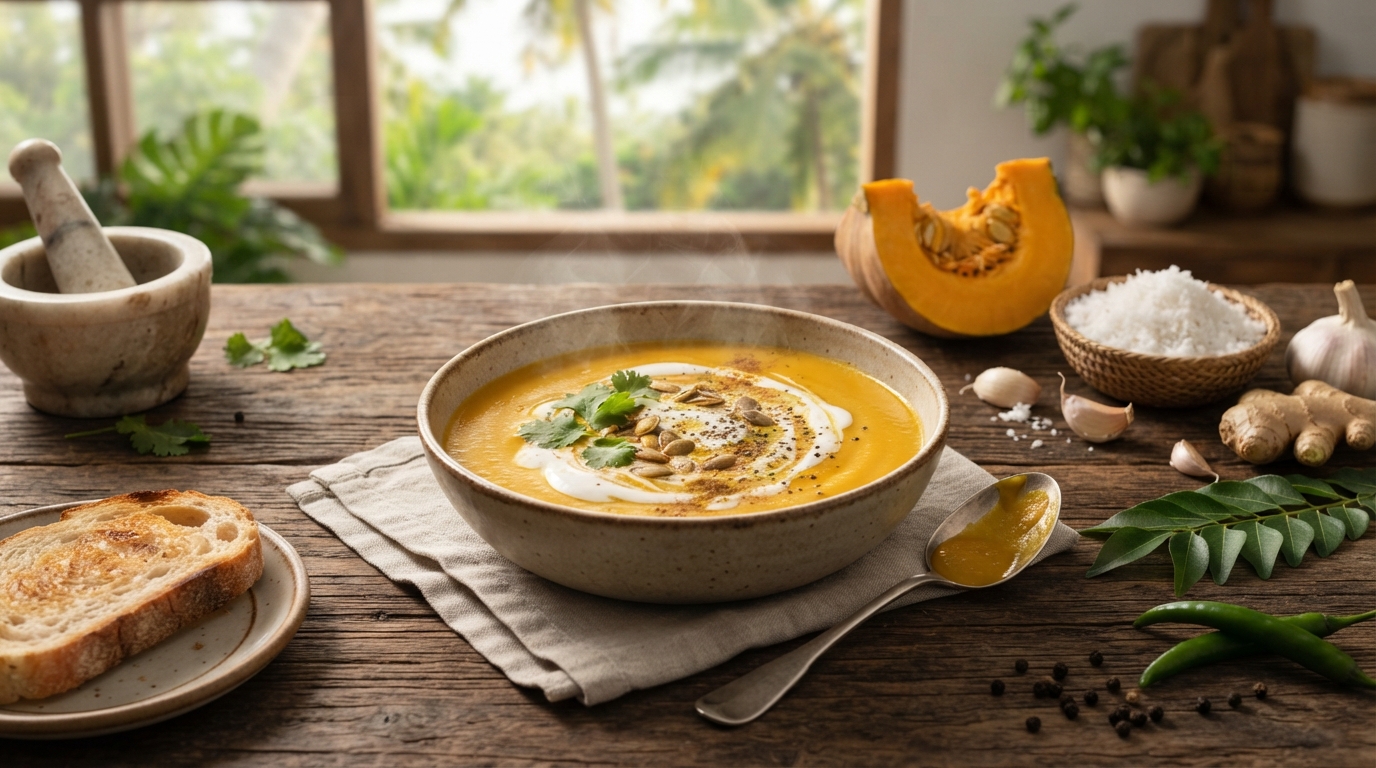
Pour the hot pumpkin soup into warm bowls.
Finish with a small swirl of cream, freshly ground black pepper, chopped parsley or coriander, and a few roasted pumpkin seeds.
Serve immediately with toasted bread, garlic bread, sourdough, or crispy croutons.
The contrast between the silky soup and crunchy toppings makes every spoonful more interesting.
How to Make Pumpkin Soup More Flavorful
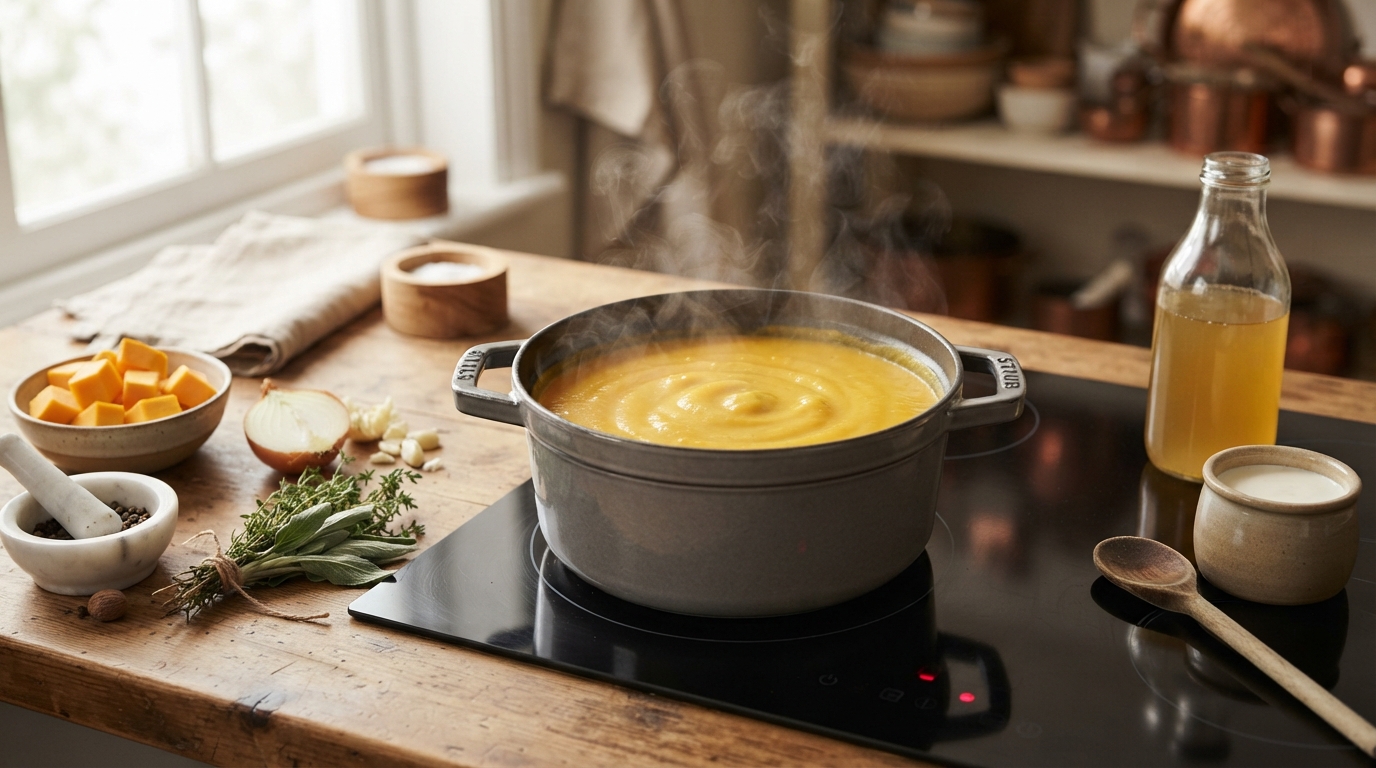
Although the classic recipe is delicious on its own, there are several ways to personalize it.
For a warmer flavor, add a small piece of fresh ginger while cooking the pumpkin.
For a spicy twist, add a pinch of chili flakes or a little Sri Lankan-style chili powder.
Coconut milk can also replace cooking cream for a naturally creamy dairy-free version. This works particularly well when using pumpkin with ginger, garlic, and mild spices.
If you prefer a roasted flavor, roast the pumpkin in the oven before adding it to the soup. Roasting caramelizes the pumpkin's natural sugars and creates a deeper, richer taste.
What to Serve With Pumpkin Soup
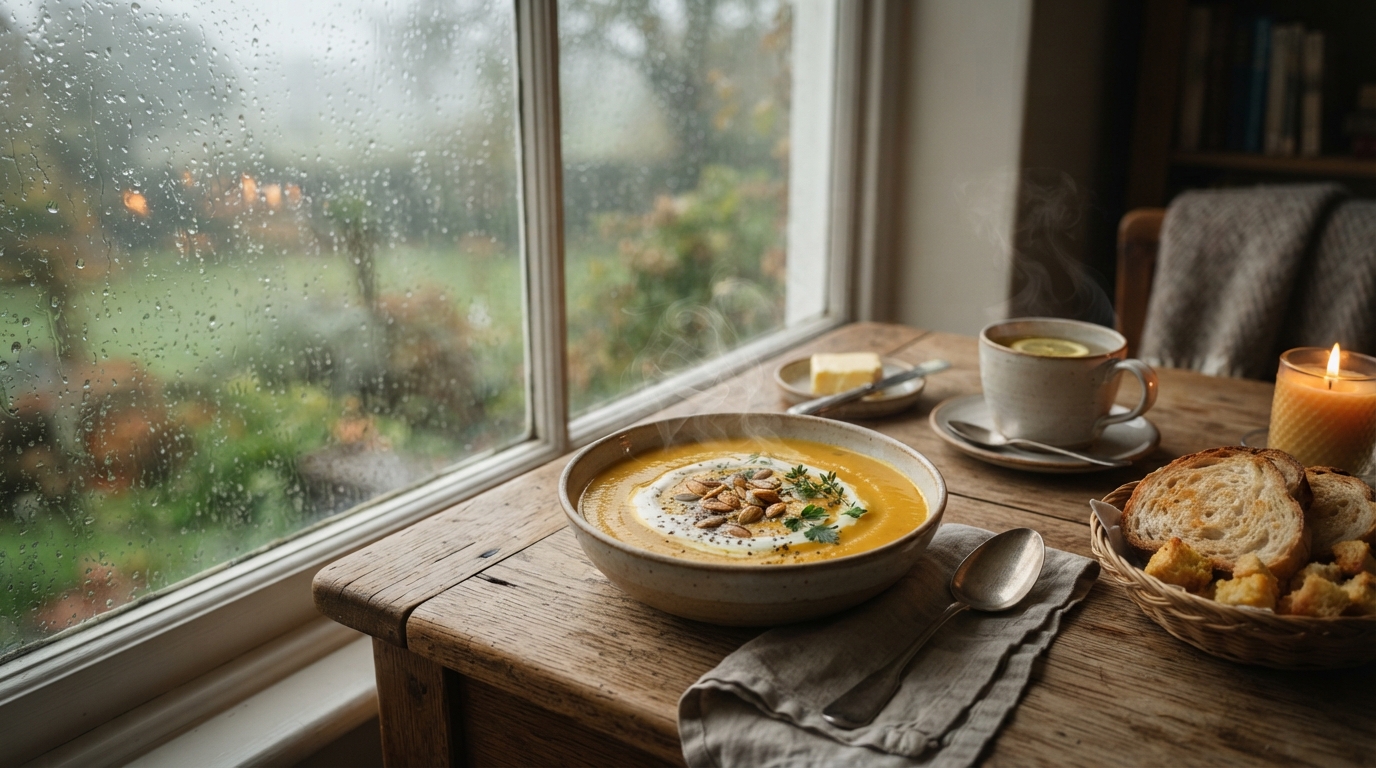
Pumpkin soup works beautifully as a starter or as a light main meal.
Serve it with:
- Garlic bread
- Toasted sourdough
- Crispy croutons
- Grilled cheese sandwiches
- Fresh garden salad
- Roasted vegetables
- Herb toast
- Pumpkin seed crackers
For a cozy rainy evening, a bowl of hot pumpkin soup with toasted bread and a cup of warm tea can be the perfect comfort-food combination.
Can You Make Pumpkin Soup Ahead of Time?
Yes. Pumpkin soup is ideal for meal preparation.
Once cooled, store the soup in an airtight container in the refrigerator and consume it within a few days. When reheating, warm it gently over medium-low heat and stir occasionally.
You may find that the flavors become even more developed after resting.
If the soup thickens in the refrigerator, simply add a little stock or water while reheating until it reaches the desired consistency.
Easy Pumpkin Soup Variations
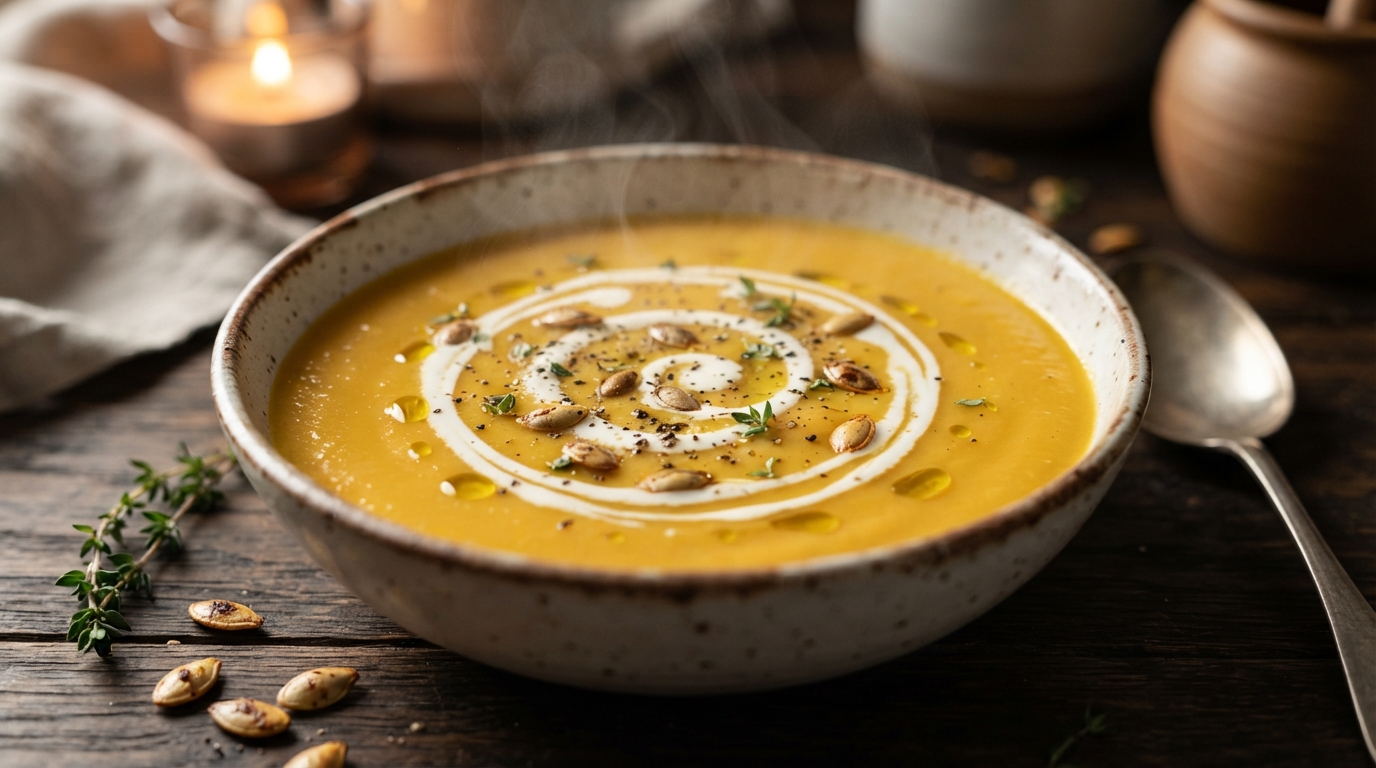
The beauty of pumpkin soup is how adaptable it can be.
Creamy Pumpkin Soup: Add extra cream for a richer, restaurant-style texture.
Pumpkin Coconut Soup: Replace cream with coconut milk for a tropical twist.
Spicy Pumpkin Soup: Add chili flakes, ginger, black pepper, or chili powder.
Roasted Pumpkin Soup: Roast the pumpkin before blending for a deeper caramelized flavor.
Pumpkin and Carrot Soup: Add fresh carrots for extra sweetness and color.
Pumpkin and Lentil Soup: Add cooked red lentils for a more filling, protein-rich meal.
A Bowl of Comfort
An authentic pumpkin soup recipe does not need complicated ingredients or elaborate techniques. Fresh pumpkin, aromatic onion and garlic, good-quality stock, gentle spices, and a little cream are enough to create a comforting bowl packed with flavor.
Whether enjoyed on a rainy afternoon, served as a dinner starter, or prepared as a cozy family meal, pumpkin soup is a wonderful example of how simple ingredients can create something truly satisfying.
So, the next time you have a fresh pumpkin in the kitchen, skip the complicated dishes and turn it into a warm, silky bowl of homemade pumpkin soup. Add crispy seeds, toasted bread, and your favorite herbs—and enjoy the simple comfort of a bowl made from scratch.
Most Popular












Anaya
comment1