



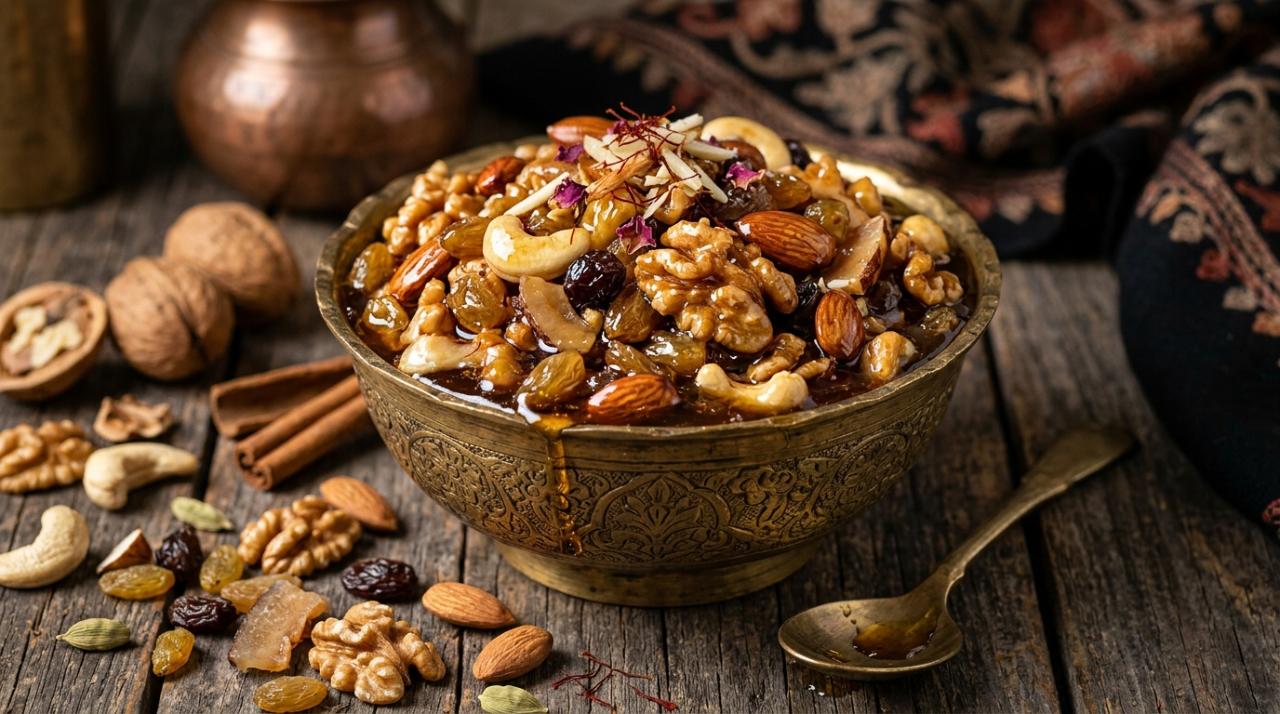
Diwali is a wonderful time to explore traditional sweets from different parts of India. From crispy fried delicacies to creamy milk desserts, every region has its own way of celebrating through food. If you want something rich, aromatic, and different from familiar festive favourites, Kashmiri Shufta is a dessert worth discovering.
Originating in the culinary traditions of Kashmir, Shufta is known for its generous combination of nuts, dried fruits, warming spices, and a sweet coating. Depending on the household and recipe, ingredients may include almonds, walnuts, cashews, raisins, coconut, and aromatic spices. Some variations also incorporate paneer or other regional additions.
Unlike many Indian sweets that rely on a single main ingredient, Shufta celebrates variety. Every spoonful offers a mixture of crunchy nuts, chewy dried fruit, and fragrant sweetness. This Kashmiri Shufta recipe introduces you to a traditional-style preparation that can bring a distinctive flavour to your Diwali dessert table.
What Makes Kashmiri Shufta Special?
Shufta reflects the rich culinary heritage of Kashmir, where nuts, dried fruits, and fragrant spices play important roles in many traditional dishes. Its appeal comes from the contrast between textures and flavours rather than from an elaborate pastry or complicated cooking technique.
Almonds and walnuts offer a rich, nutty taste, while raisins and dates contribute natural sweetness. Cardamom, cinnamon, and a small amount of black pepper can introduce warmth and complexity. A sweet syrup brings the ingredients together, creating a glossy coating.
Although Shufta is associated with Kashmiri cuisine rather than being exclusively a Diwali sweet, it makes an elegant addition to an Indian festive menu. Its colourful ingredients and luxurious appearance also make it suitable for special gatherings and homemade gifting.
Ingredients for Homemade Kashmiri Shufta
This recipe serves approximately four people.
- ¼ cup almonds
- ¼ cup walnuts
- ¼ cup cashews
- ¼ cup raisins
- 3–4 dates, chopped
- 2 tablespoons desiccated coconut
- ⅓ cup sugar or grated jaggery
- ¼ cup water, approximately
- 2 tablespoons ghee
- ¼ teaspoon cardamom powder
- A small pinch of cinnamon powder
- A tiny pinch of black pepper, optional
- A few strands of saffron, optional
Optional traditional variation: Some versions of Shufta include small paneer pieces or other dried fruits. You can adapt the ingredient selection according to your preferred regional style.
How to Make Kashmiri Shufta Step by Step
Step 1: Prepare the Nuts and Dried Fruits
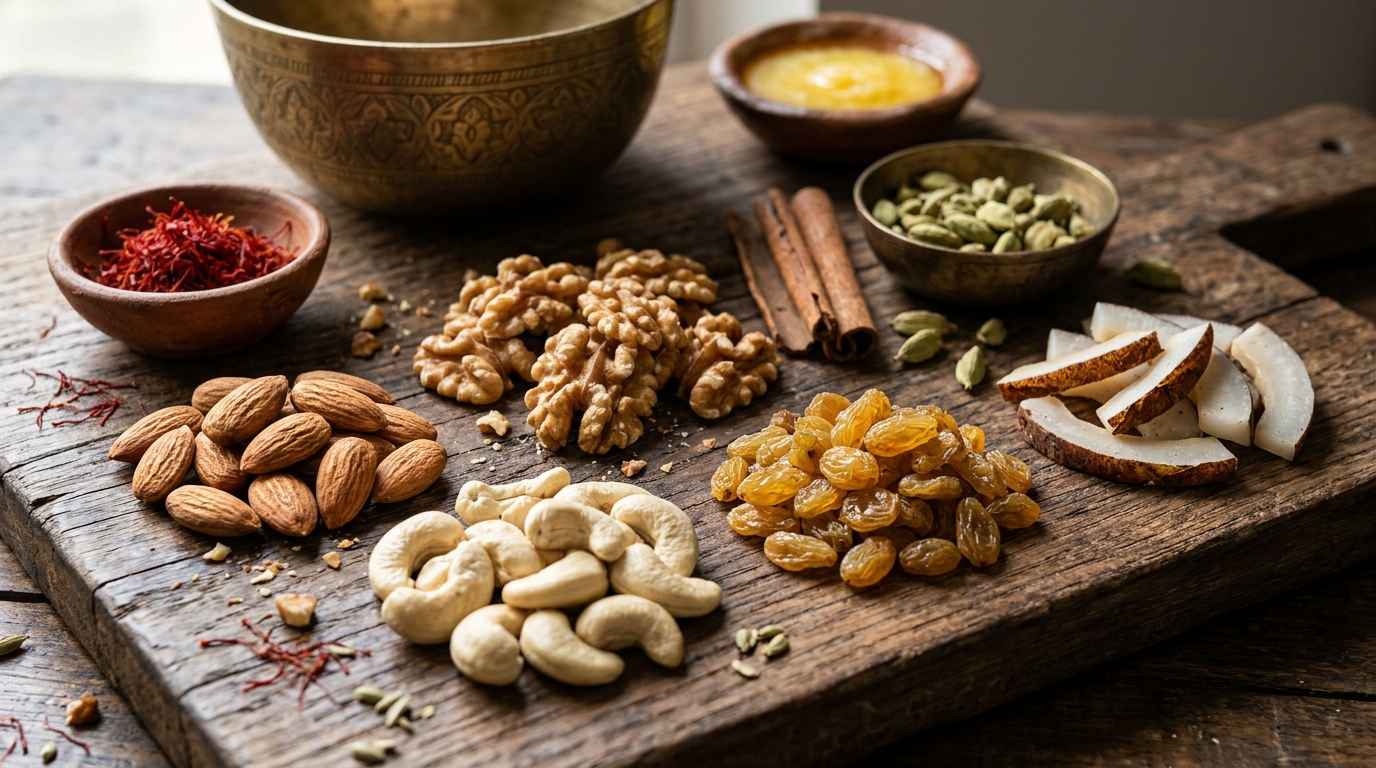
Measure the almonds, walnuts, cashews, raisins, dates, and coconut. If the nuts are very large, chop them into bite-sized pieces.
If you prefer softer almonds, soak them briefly in warm water and remove their skins. Dry them thoroughly before cooking.
Check the dried fruits for stems or hard pieces. Keeping the ingredients in similarly sized portions makes the finished dessert easier to serve and enjoy.
Step 2: Lightly Roast the Nuts
Heat the ghee in a heavy-bottomed pan over low to medium-low heat. Add the almonds, walnuts, and cashews.
Roast gently, stirring frequently, until the nuts become fragrant and lightly golden. Avoid high heat, as nuts can burn quickly and develop a bitter taste.
Add the desiccated coconut and stir briefly. Transfer the mixture to a plate and set it aside.
Step 3: Prepare the Sweet Syrup
Add the sugar or jaggery and water to the same pan. Heat gently until the sweetener dissolves, stirring as necessary.
Allow the liquid to simmer briefly until it becomes slightly syrupy. If using jaggery, strain the dissolved liquid beforehand if it contains impurities.
Avoid reducing the syrup too much, as it may become overly thick and harden around the nuts.
Step 4: Add the Fruits and Spices
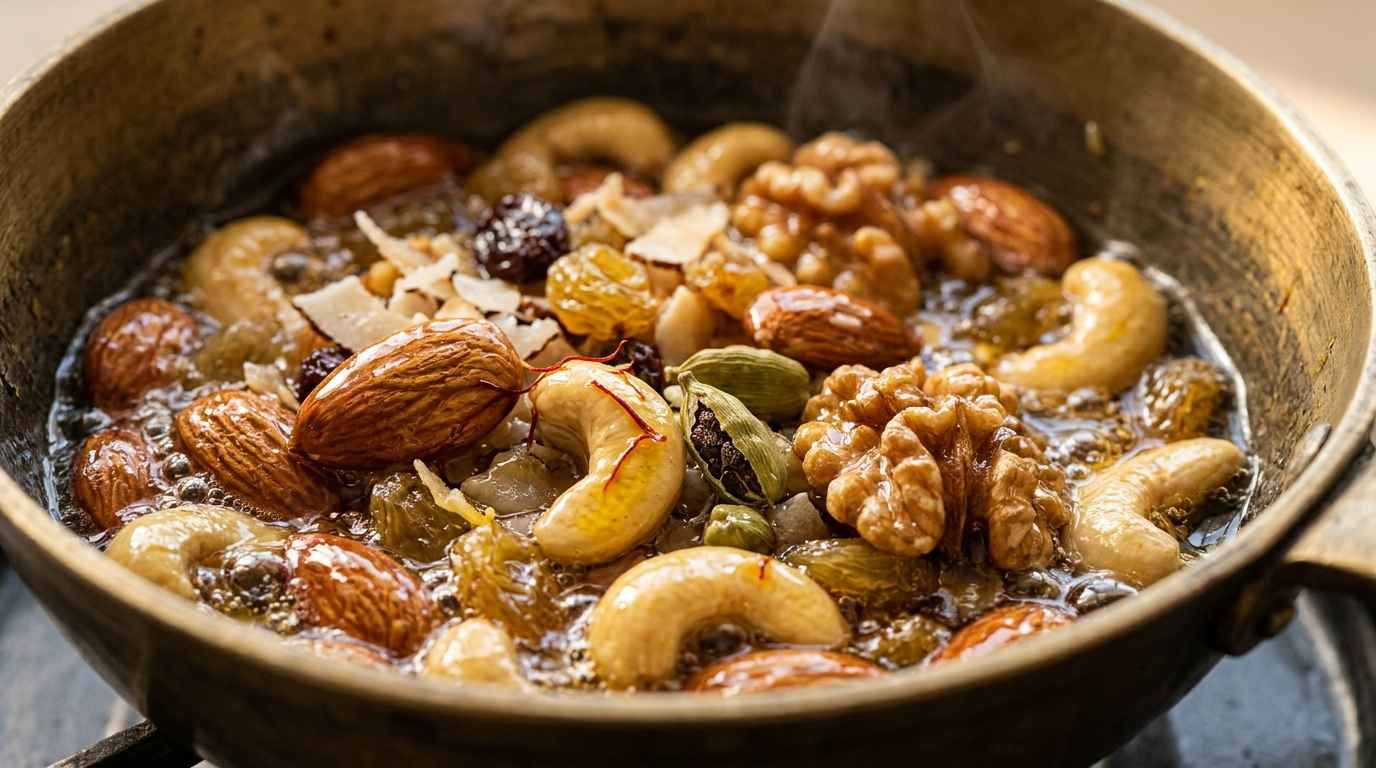
Add the raisins and chopped dates to the syrup. Stir gently to coat them.
Return the roasted nuts and coconut to the pan. Add the cardamom powder, cinnamon, and optional black pepper or saffron.
Mix over low heat until the ingredients are evenly coated and the mixture becomes glossy. If it appears too dry, add a small splash of hot water and stir carefully.
Step 5: Finish and Serve
Remove the pan from the heat once the ingredients are well combined and fragrant. Allow the Shufta to rest briefly so the flavours can blend.
Serve it warm in a small decorative bowl. For a festive presentation, garnish with a few chopped almonds, walnut pieces, or saffron strands.
Expert Tips for Perfect Kashmiri Shufta
The secret to a delicious Kashmiri Shufta recipe is preserving the individual textures of the ingredients. Roast the nuts gently and avoid cooking the dried fruits for too long.
Use fresh nuts for the best flavour, and balance the sweetness according to the natural sugar content of the dates and raisins. If you prefer a more complex flavour, a tiny amount of black pepper can complement the sweetness without making the dessert noticeably hot.
Keep the syrup relatively light if you want a glossy mixture rather than a hard brittle coating. Add the nuts towards the end and stir gently to avoid breaking them into small pieces.
How to Serve and Store Kashmiri Shufta
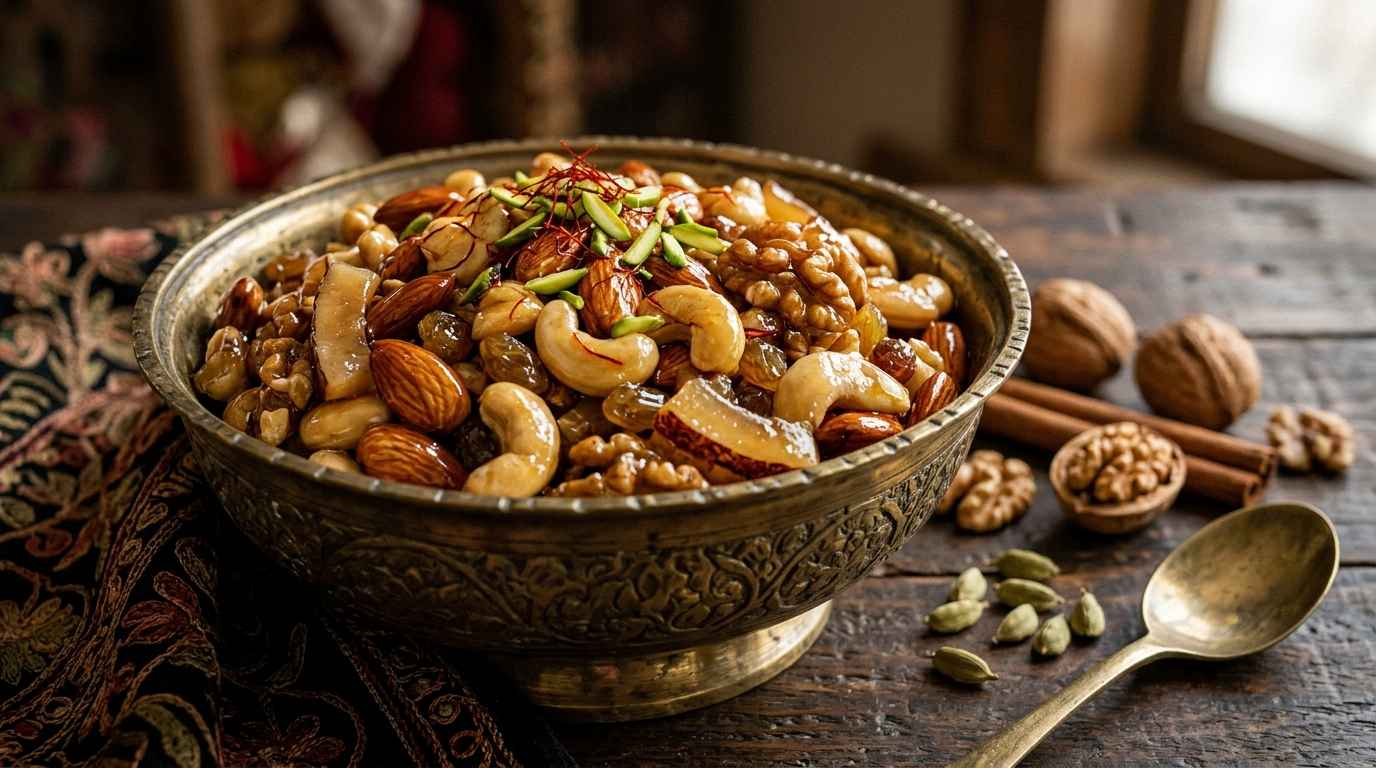
Kashmiri Shufta can be served as a small dessert after a festive meal or alongside other traditional sweets such as Mohanthal, Karanji, and Adhirasam.
Because it is rich in nuts and dried fruits, small portions are often sufficient. Pair it with unsweetened tea or coffee to balance the sweetness.
For storage, transfer completely cooled Shufta to a clean, airtight container and refrigerate if the preparation contains moist ingredients or paneer. The texture may firm up as it cools, so warm it gently before serving. Follow appropriate food-safety practices and avoid keeping moist preparations at room temperature for extended periods.
A Festive Dessert Full of Texture and Flavour
Kashmiri Shufta offers a different way to experience traditional Indian sweets. Its combination of roasted nuts, dried fruits, fragrant spices, and sweet syrup creates a dessert that is rich, colourful, and satisfying.
By preparing this Kashmiri Shufta recipe, you can bring a taste of Kashmir-inspired culinary tradition to your Diwali celebrations. Whether served in small bowls after dinner or shared as part of a festive sweet platter, this distinctive dessert offers a memorable alternative to more familiar Indian treats.
Most Popular









Anaya
comment1