


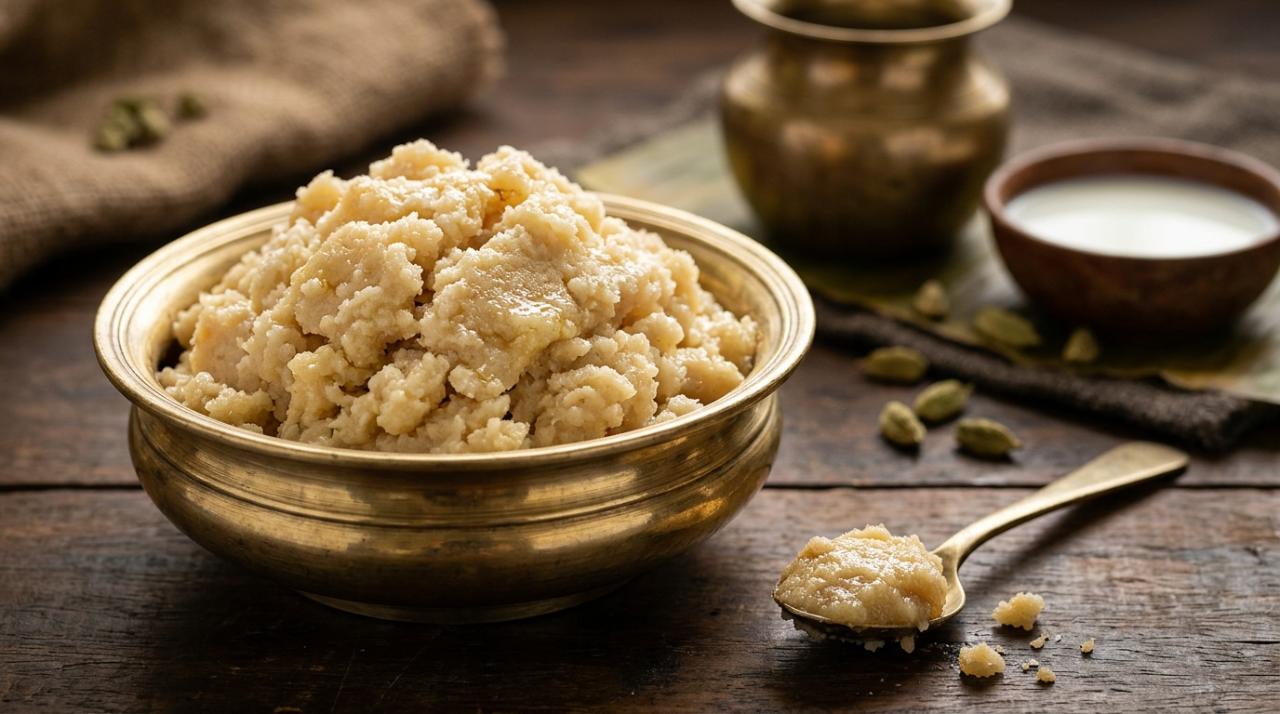
Some of the most memorable Indian sweets are created with just a few ingredients and plenty of patience. Palkova is a perfect example. This traditional South Indian milk sweet transforms fresh milk into a rich, creamy delicacy through slow cooking and constant stirring. Its naturally milky flavour, soft texture, and gentle sweetness have made it a favourite in many Tamil households.
Palkova is especially associated with Tamil Nadu, including the well-known milk-sweet tradition of Srivilliputhur. Although it is enjoyed throughout the year, its rich flavour makes it a lovely addition to Diwali celebrations, family gatherings, and festive dessert platters.
Unlike sweets that require deep-frying or complicated shaping, Palkova relies on the gradual reduction of milk. As the liquid evaporates, the milk solids become concentrated, creating a creamy mixture with a slightly grainy texture. This traditional Palkova recipe shows you how to recreate that comforting taste at home.
What Makes Traditional Palkova Special?
The beauty of Palkova lies in its simplicity. Milk is the main ingredient, and the cooking process allows its natural sweetness and richness to become more concentrated.
As the milk simmers, water evaporates and the milk solids gradually thicken. Regular stirring prevents the mixture from sticking to the pan and helps create the characteristic soft consistency.
Some traditional versions use only milk and sugar, while others include a little cardamom for fragrance. The final texture can range from soft and creamy to firmer and slightly grainy, depending on how long the milk is reduced.
Palkova is a wonderful example of traditional cooking that rewards patience. The ingredients are uncomplicated, but careful heat control makes a noticeable difference to the finished sweet.
Ingredients for Homemade Palkova
This recipe makes approximately four small servings.
- 1 litre full-fat milk
- ¼–⅓ cup sugar, adjusted to taste
- ¼ teaspoon cardamom powder, optional
- 1 teaspoon ghee, optional for greasing the pan
Full-fat milk is recommended because it produces a richer result. Sugar can be adjusted according to your preference and the sweetness you want in the finished dessert.
How to Make Traditional Palkova Step by Step
Step 1: Heat the Milk
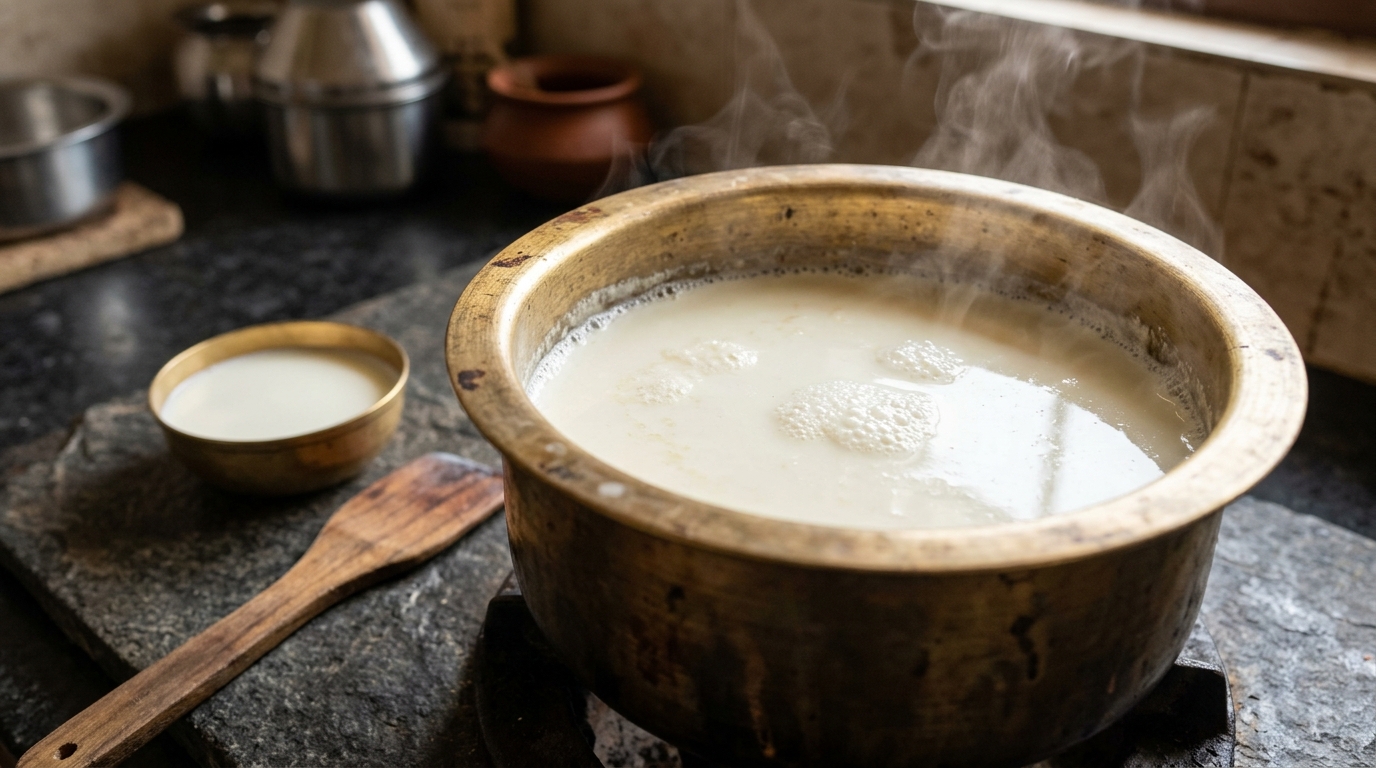
Pour the milk into a heavy-bottomed, wide pan. Place it over medium heat and bring it to a gentle boil, stirring occasionally to prevent the milk from sticking.
A wide pan helps the water evaporate more efficiently. Once the milk begins to boil, reduce the heat to low or medium-low.
Step 2: Simmer and Reduce the Milk
Allow the milk to simmer gently, stirring frequently with a heat-resistant spoon or spatula. As the milk reduces, a layer of cream may form along the sides of the pan.
Scrape this cream back into the milk and continue stirring. This step helps incorporate the milk solids and prevents them from burning.
Over time, the milk will become thicker and develop a creamy, slightly grainy appearance. Depending on the pan and heat, this process can take 45–90 minutes or longer.
Step 3: Add the Sugar
When the milk has reduced considerably and resembles a thick mixture, add the sugar.
Stir continuously as the sugar dissolves. The mixture may become temporarily thinner, so continue cooking gently until it thickens again.
Avoid increasing the heat to speed up the process. Slow cooking helps prevent scorching and develops a richer flavour.
Step 4: Add Cardamom
Once the mixture is thick and creamy, add the cardamom powder if desired.
Stir well to distribute the fragrance throughout the Palkova. If using ghee to grease the pan, a small amount may help with handling, although it is not essential.
Step 5: Cook to the Desired Consistency
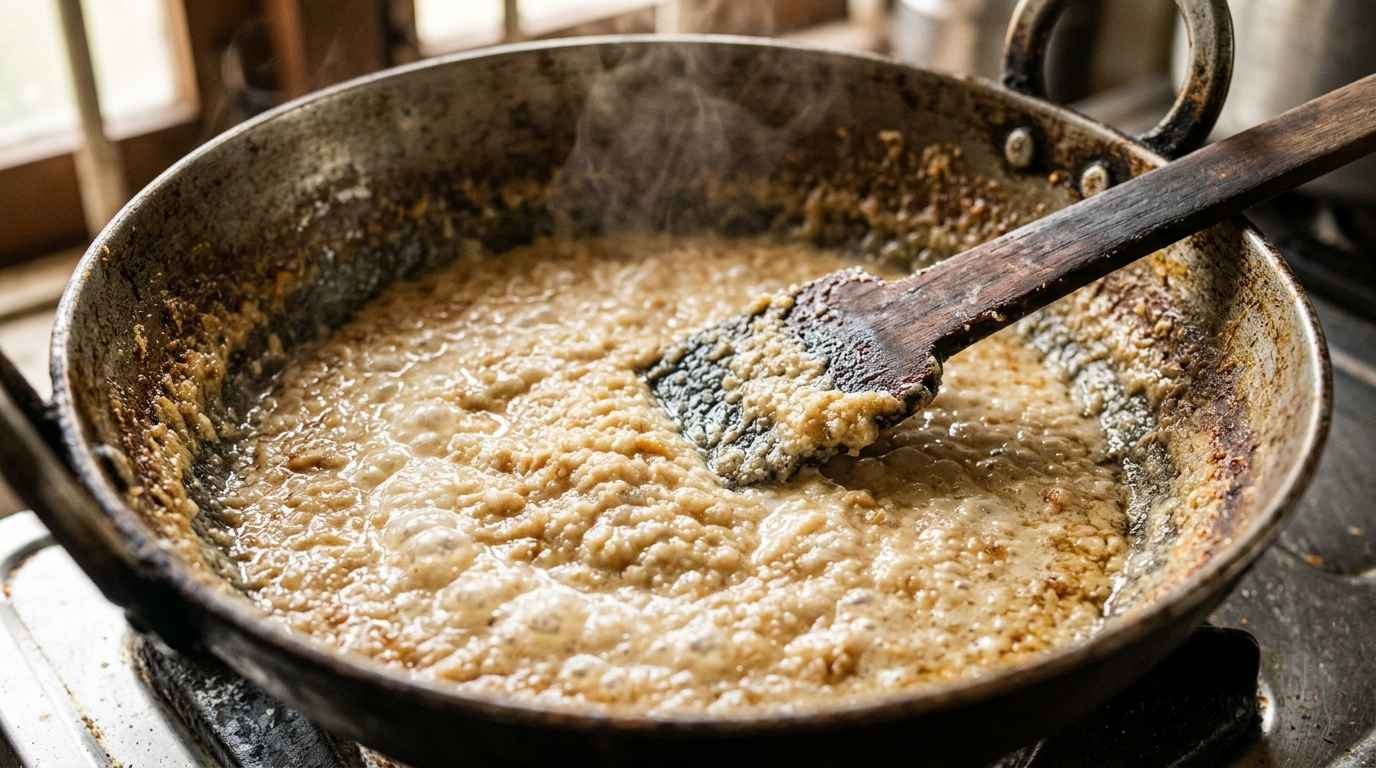
Continue cooking until the Palkova reaches your preferred texture. For a soft dessert, remove it while it is still creamy and spoonable. For a firmer sweet, reduce it further until it holds its shape.
Remember that Palkova thickens as it cools, so avoid cooking it until completely dry. Transfer it to a clean bowl and allow it to cool before serving.
Expert Tips for Perfect Palkova
The most important part of this traditional Palkova recipe is controlling the heat. High temperatures can cause the milk solids to stick to the bottom of the pan and develop a burnt flavour.
Use a heavy-bottomed pan, stir frequently, and scrape down the sides as the milk reduces. Adding sugar after the milk has thickened makes it easier to monitor the reduction process.
If the mixture appears too loose, continue cooking gently. If it becomes too firm, a small amount of warm milk can help soften it while the mixture is still warm.
For a more traditional flavour, choose good-quality full-fat milk and avoid adding too many extra ingredients that could overpower its natural richness.
How to Serve and Store Palkova
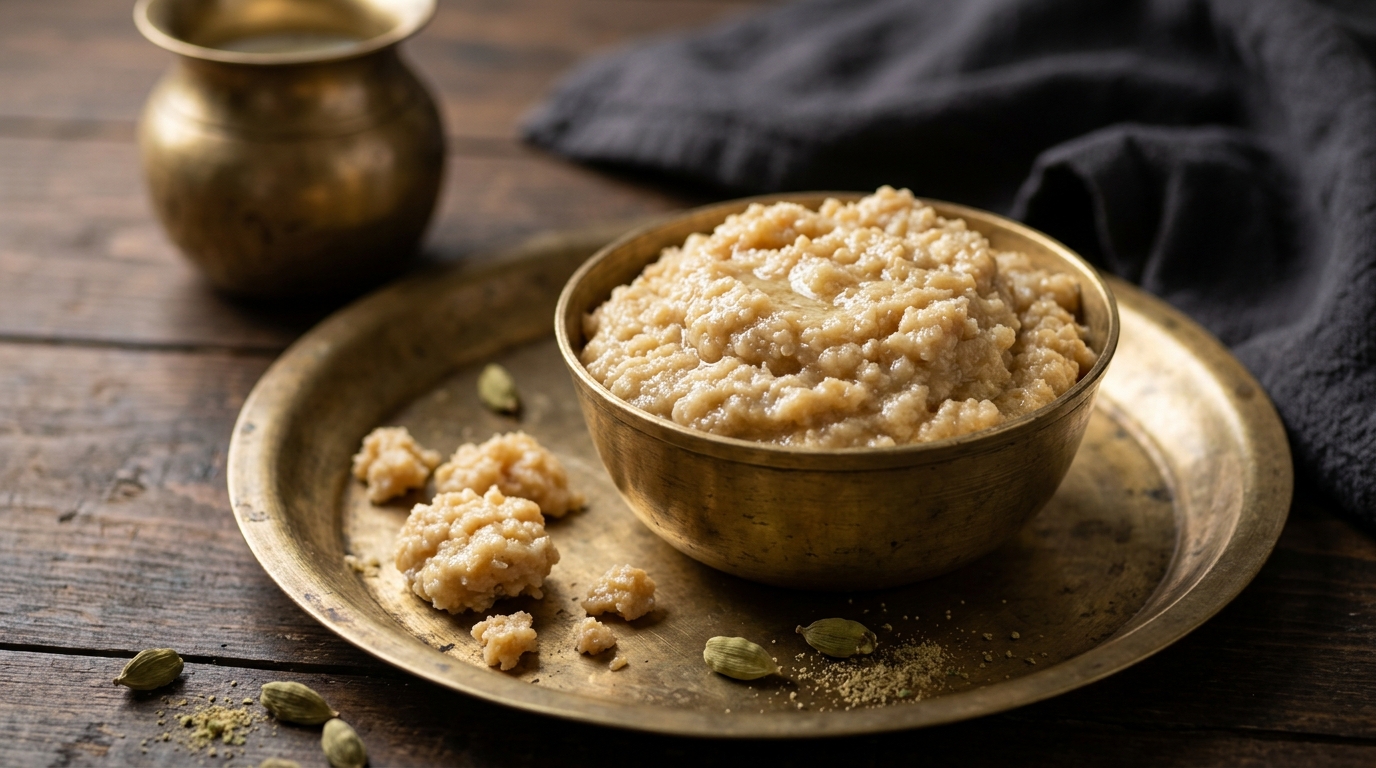
Serve Palkova in small bowls or shape the cooled mixture into soft portions for a festive platter. A light sprinkle of cardamom or a few finely chopped nuts can add an attractive finishing touch.
It pairs beautifully with tea or coffee and can be served alongside other Diwali favourites such as Adhirasam, Mohanthal, and Karanji.
Because Palkova contains concentrated milk and moisture, refrigerate it in a clean, airtight container once cooled. Use clean utensils when serving and consume it within a few days, following appropriate food-safety guidance. Do not leave it at room temperature for extended periods.
A Timeless Sweet Made with Patience
Traditional Palkova proves that a memorable dessert does not need a long list of ingredients. Fresh milk, sugar, gentle heat, and patient stirring are enough to create a rich sweet with a comforting flavour and distinctive texture.
By trying this traditional Palkova recipe, you can bring a little South Indian culinary heritage into your Diwali kitchen. Take your time, enjoy the wonderful aroma of slowly reducing milk, and share this creamy homemade delicacy with family and friends during the festive season.
Most Popular






Anaya
comment1